
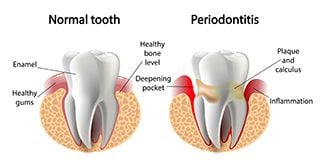
Periodontal (gum) disease, also known as periodontitis, is a bacterial infection that inflames the soft tissue around your teeth and becomes more severe if left untreated. Over time, gum disease will erode the bone that supports your teeth, leading to mobility and tooth loss. Gum disease is quite common, though very preventable, because it is usually a result of poor oral hygiene habits.
It’s important to recognize the specific symptoms of each stage of gum disease and its cause. Prevention is the best option, though the earlier it is detected, the more likely it can be reversed.
Stages of Gum Disease
- Gingivitis: The first stage of gum disease presents itself with red, swollen, and bleeding gums. It is the only stage of gum disease that can be reversed, as there hasn’t been any damage done to bone yet. Brushing and flossing your teeth at least twice a day and visiting your dentist for checkups and professional cleanings every six months is an infallible way to prevent gingivitis.
- Mild periodontitis: If gingivitis is left untreated, it will progress into mild periodontitis. At this stage, your gums will begin to pull away from your teeth and some bone loss will occur. Periodontal pockets will also develop, where it’s easier for plaque, tartar, and bacteria to become trapped. A toothbrush and floss will not be able to reach inside these pockets. Though reversing this stage is no longer possible, it can still be maintained by a periodontist, who will offer proper oral hygiene techniques and may even recommend deep cleaning procedures.
- Moderate periodontitis: As periodontitis progresses, bacteria will continue to damage the ligaments, joints, and soft tissues surrounding your tooth, root, and socket. At this stage, you will experience sore and tender gums and what damage has been done is now permanent.
- Severe periodontitis: The most severe stage of gum disease presents with receding and bleeding gums, halitosis, pus-filled abscesses, gapping, and changes in bite. If your periodontitis has progressed this far, you will experience loose teeth as the infection keeps eating away at bone. Some teeth may have even already fallen out.
Causes of Gum Disease
 While the main cause of gum disease is poor oral hygiene, other risk factors exist, such as:
- Smoking: Weakens your body’s ability to fight infection, making it more difficult for gum tissue to repair itself.
- Autoimmune diseases: People who suffer from autoimmune diseases, like diabetes, cancer, and HIV, have a weakened immune system and so their bodies have a harder time fighting off infections.
- Genetics: If your family is more prone to dental disease, you can ultimately face dental disease as well.
- Hormonal changes: The risk for gum disease increases in women when hormones are affected by pregnancy, birth control pills, puberty, menopause, or menstruation.
- Chronic inflammation: Health conditions that cause inflammation in your body, such as arthritis, COVID-19, or cardiovascular disease, are linked to gum disease.
- Certain medications: Medications that reduce your production of saliva or cause abnormal growth of gum tissue, such as Dilantin, Procardia, and Adalat, can cause gum disease.