
Your child’s first tooth is a big developmental milestone, so it’s important for you to know what to expect and how to maintain your child’s teeth when they start coming in. It’s just as vital to take care of baby teeth as it is permanent teeth, even though the baby teeth eventually fall out. Improper dental hygiene can set your child up for oral complications early on, as well as poor dental hygiene habits down the road, including more severe oral issues. Be sure to look for the signs that their baby teeth are coming in and take the proper steps to keeping them healthy.
Eruption of Baby Teeth
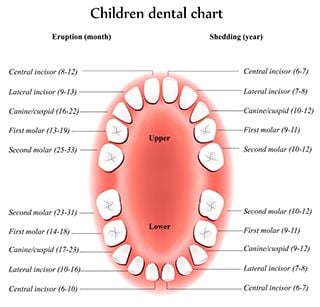 Baby teeth typically erupt in the lower front teeth region, with most children obtaining all their baby teeth by three years old. For some children, this timeline varies. Some may not experience their first erupted baby tooth until their first birthday.
Teething
Teething is an indicator that your child’s baby teeth are coming in, and is usually accompanied by slight discomfort, excessive drooling, and swollen or tender gums. Some tips to remember when teething begins include:
- Massage your child’s gums with a clean finger to ease some discomfort.
- Offer a solid, not liquid-filled, teething ring (can be frozen).
- Offer a clean, frozen, or wet washcloth.
- Offer a teething biscuit, but be sure to monitor your child while they eat it.
- If discomfort persists, talk to your child’s pediatrician about a safe dose of liquid acetaminophen.
- Avoid teething tablets that contain belladonna and benzocaine gel, as these substances can be potentially toxic to your child.
- Never use a teething necklace, as your child will be at risk for strangulation or choking.
Proper Oral Hygiene
Once your child’s first tooth comes in, you will need to begin an oral hygiene routine with them. The process slightly changes as they grow, so some helpful tips include:
- Brushing twice a day with a grain-of-rice-sized dollop of fluoride toothpaste, especially after consuming foods or beverages.
- Refrain from letting your child go to bed with a bottle since this can lead to tooth decay.
- When your child turns three years old, you may increase fluoride toothpaste to a pea-sized amount when brushing.
- When your child is at the developmental stage where they can spit, teach them to spit out the excess toothpaste after brushing.
- It’s recommended that the parent place the toothpaste on their child’s toothbrush until they reach six years of age.
- Parents should monitor and assist their child while brushing until they reach seven or eight years old.
Importance of Fluoride
Fluoride is an essential mineral for preventing tooth decay, as it works to harden the enamel of the teeth. Fluoride is often found in tap water, rarely ever bottled, so it’s a good idea to give your child tap water when they begin eating solid foods. If you feel that your child is not consuming enough fluoride, talk to your pediatric dentist about fluoride supplements.